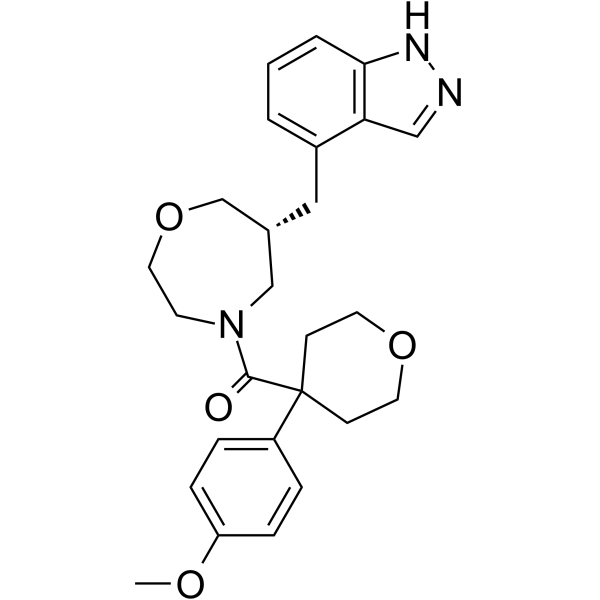
TIP60
Histone acetyltransferase TIP60 (KAT5) is a member of the MYST family of lysine acetyltransferases and functions as the catalytic core of the evolutionarily conserved NuA4 chromatin-modifying complex, where it promotes histone acetylation and transcriptional regulation[1][2]. Mechanistically, TIP60 plays a central role in the DNA damage response by interacting with and acetylating key DNA repair regulators, including ataxia-telangiectasia mutated (ATM), thereby facilitating ATM activation following DNA double-strand breaks[1][3][4]. Following DNA damage, the NuA4/TIP60 complex is recruited to chromatin surrounding DNA lesions and contributes to chromatin remodeling events that support efficient DNA repair[1][5]. TIP60 also regulates the acetylation of multiple non-histone proteins involved in genome maintenance, highlighting its broad role in preserving cell viability and genomic stability[2]. In disease contexts, reduced TIP60 activity or expression has been associated with genomic instability, and experimental evidence supports a tumor-suppressive role for TIP60 in breast cancer models[6]. Beyond cancer, genetic studies demonstrate that TIP60 is required for neural stem cell maintenance, neurogenesis, and normal brain development, indicating functions that extend beyond canonical DNA repair pathways[7]. Compared with related MYST acetyltransferases, TIP60 is distinguished by its direct coupling of chromatin sensing and ATM-dependent DNA damage signaling, making it a widely used experimental model for investigating chromatin-regulated genome surveillance mechanisms[1][3][4].
References:
- [1]. Squatrito M, et al. Tip60 in DNA damage response and growth control: many tricks in one HAT. Trends Cell Biol. 2006 Sep;16(9):433-42. [Content Brief]
- [2]. Sun Y, et al. Tip60: connecting chromatin to DNA damage signaling. Cell Cycle. 2010 Mar 1;9(5):930-6. [Content Brief]
- [3]. KAT5 phosphorylation links chromatin to ATM activation. Cancer Discov. 2013 Jul;3(7):OF18. [Content Brief]
- [4]. TIP60 gene information from NCBI.
- [5]. Liu J, et al. Metabolic modulation of chromatin: implications for DNA repair and genomic integrity. Front Genet. 2013 Sep 17;4:182. [Content Brief]
- [6]. Bassi C, et al. The acetyltransferase Tip60 contributes to mammary tumorigenesis by modulating DNA repair. Cell Death Differ. 2016 Jul;23(7):1198-208. [Content Brief]
- [7]. Tominaga K, et al. Tip60/KAT5 Histone Acetyltransferase Is Required for Maintenance and Neurogenesis of Embryonic Neural Stem Cells. Int J Mol Sci. 2023 Jan 20;24(3):2113. [Content Brief]
All Product Categories
-
TIP60 Related Products (5)
Related Products (5)

-
MG 149
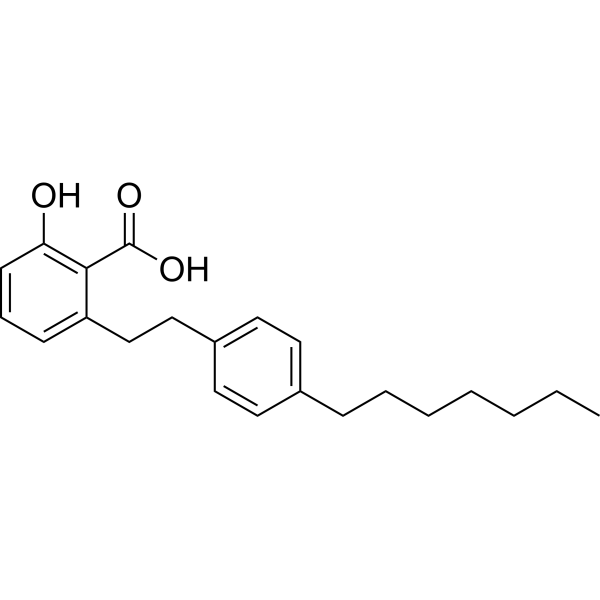 0 ImagesSynonyms: Tip60 HAT inhibitorMG149 (Tip60 HAT inhibitor) is a selective and potent Tip60 inhibitor with IC50 of 74 uM, similar potentcy for MOF (IC50 = 47 uM); little potent for PCAF and p300 (IC50 >200 uM). MG 149 inhibits KAT8 and blocks PINK1 kinase activity. MG149 inhibits the phosphorylation of Parkin and ubiquitin, thereby suppressing the initiation of PINK1-dependent mitophagy. MG 149 can reverse chronic restraint stress (CRS) induced hypertension and related molecular changes. MG 149 commonly used in research on diseases such as hypertension and Parkinson's disease.
-
TH1834
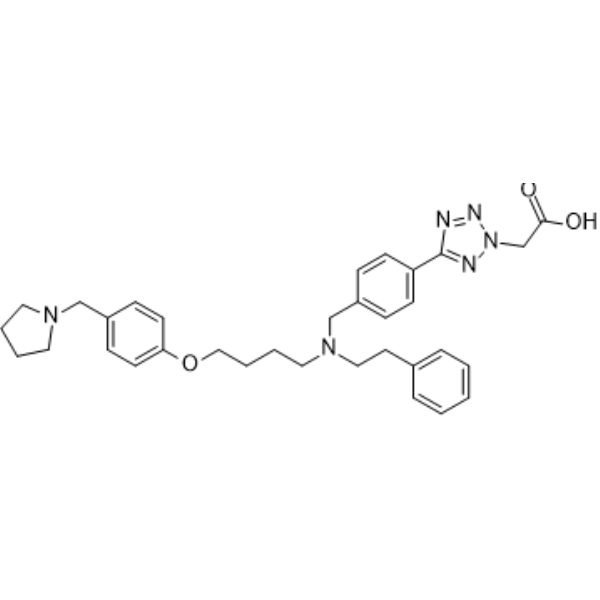 0 ImagesTH1834 is a specific Tip60 (KAT5) histone acetyltransferase (HAT) inhibitor. TH1834 induces apoptosis and increases DNA damage in breast cancer. TH1834 does not affect the activity of related histone acetyltransferase MOF. Anticancer activity.
-
TH1834 dihydrochloride
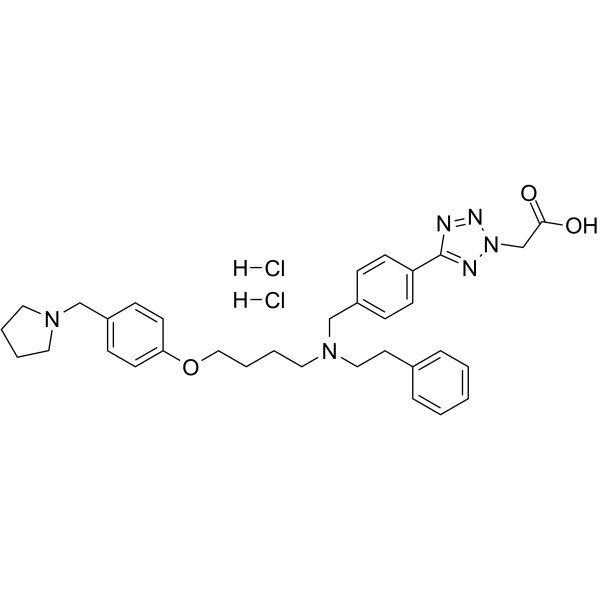 0 ImagesTH1834 dihydrochloride is a specific Tip60 (KAT5) histone acetyltransferase inhibitor. TH1834 dihydrochloride induces apoptosis and increases DNA damage in breast cancer. TH1834 dihydrochloride does not affect the activity of related histone acetyltransferase MOF. Anticancer activity.
-
CF53
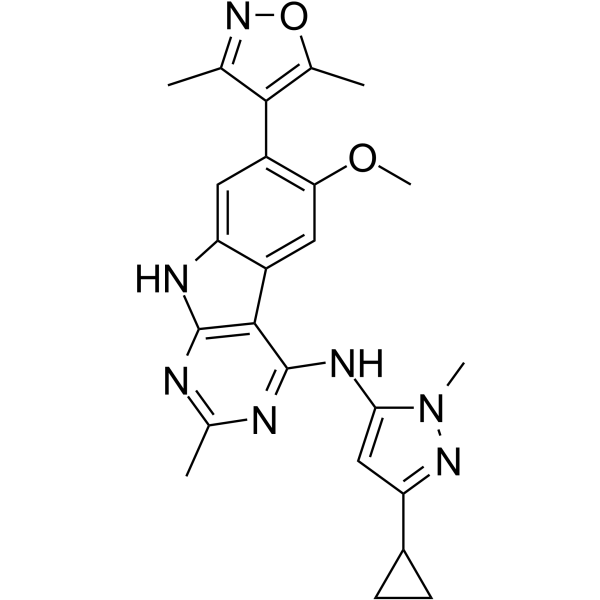 0 ImagesCF53 is a highly potent, selective and orally active inhibitor of BET protein, with a Ki of <1 nM, Kd of 2.2 nM and an IC50 of 2 nM for BRD4 BD1. CF53 binds to both the BD1 and BD2 domains of BRD2, BRD3, BRD4, and BRDT BET proteins with high affinities, very selective over non-BET bromodomain-containing proteins. CF53 shows potent anti-tumor activity both in vitro and in vivo.